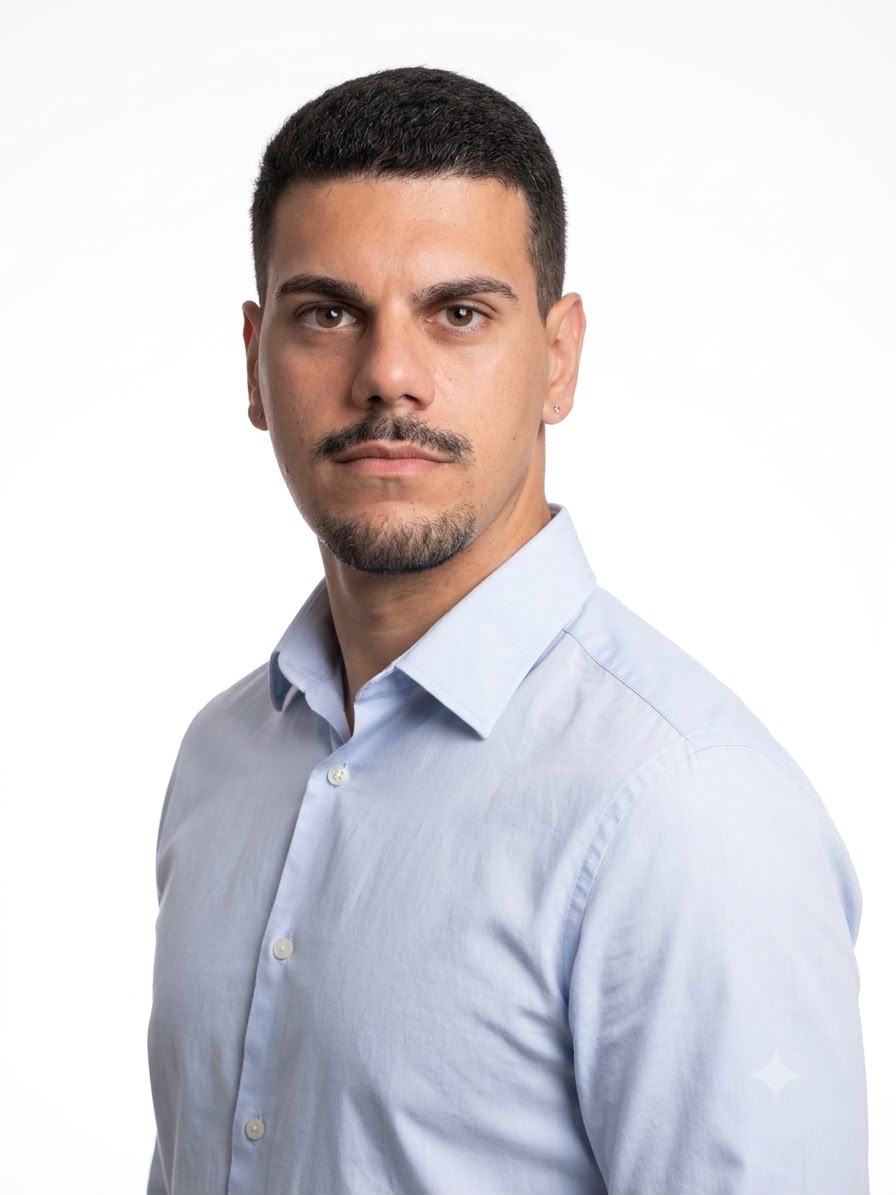
WILLIAM PRESTIGIOVANNI
kali@0xPR3ST1JH0NN7:~
kali@0xPR3ST1JH0NN7:~ whoami
Everything started with Mr. Robot, a passion that sparked my journey into cybersecurity and drove me to turn it into my profession. Today, I work as a Cybersecurity Consultant and I'm finishing my Master's degree in Cybersecurity. My approach combines the practical skills gained in the professional field with a solid theoretical foundation derived from academic studies and platforms like Hack The Box.
kali@0xPR3ST1JH0NN7:~ cat experience.txt
• Penetration Tester (September 2024 - Present), Cyber Security Consultant specialized in conducting Vulnerability Assessments, Web and Infrastructure Penetration Testing, Red Teaming, Wi-Fi Assessments, and Threat Intelligence, with experience in vulnerability management using various tools
• System and Security Engineer (December 2023 - July 2024) focusing on installation, configuration, updating, and support of Red Hat products (RHEL, Identity Management)
• Top 10 placement (9th out of 90 teams) in the Red Hot Cyber 2026 Capture The Flag (CTF) competition
• System and Security Engineer (December 2023 - July 2024) focusing on installation, configuration, updating, and support of Red Hat products (RHEL, Identity Management)
• Top 10 placement (9th out of 90 teams) in the Red Hot Cyber 2026 Capture The Flag (CTF) competition
CERTIFICAZIONI

PERCORSO ACCADEMICO
2023 — Present
Master's Degree in Cybersecurity
Sapienza Università di Roma
Cybersecurity-oriented track, with in-depth focus on Ethical Hacking · Practical Network Defense · Network Infrastructures · Malware Analysis.
2019 — 2023
Bachelor's Degree in Computer Science
Università degli Studi di Roma Tor Vergata
Final grade: 100/110
Experimental thesis: “The impact of the metric on the diameter of a random temporal graph: an experimental evaluation”. The work studies statistics on two types of shortest paths in the context of random temporal graphs. Temporal graphs represent telecommunication, transport and network infrastructures by adding a temporal factor on the edges, which makes them particularly suitable for modelling everyday-life phenomena.